
Halloween in the Garden: Spooky Style That Is Safe and Kind
Halloween has come and gone for this year, but the best time to plan a good garden display is while the mess is still fresh in your mind. A little thought about lighting, materials and wildlife makes the whole thing cheaper, safer and far less work to tidy up.
A quick look at where Halloween comes from
Halloween falls on 31 October, the evening before All Hallows' Day on 1 November. Many of its customs are linked to older autumn festivals in the Celtic world, particularly Samhain, which marked the move from the lighter half of the year to the darker half.
Carving lanterns is part of that history. Long before pumpkins became the favourite, people in Ireland and Scotland hollowed out turnips and similar root vegetables. Pumpkins took over because they are larger and much easier to carve.
Plan the display around the visitors
Think about who will be coming up your path. Young children in costumes can trip easily, and long fabric near a naked flame is a real hazard. Start by walking from the gate to the front door in the dusk and noting any uneven slabs, low branches or trailing cables.
- Keep the route clear and wide enough for a small group.
- Put decorations at the edges, not across the path.
- Make sure the front door area is well lit so people can see steps.
- Tie back or trim overhanging plants that could catch a hat or a bag.
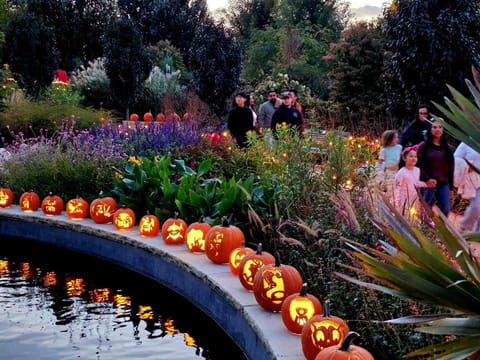
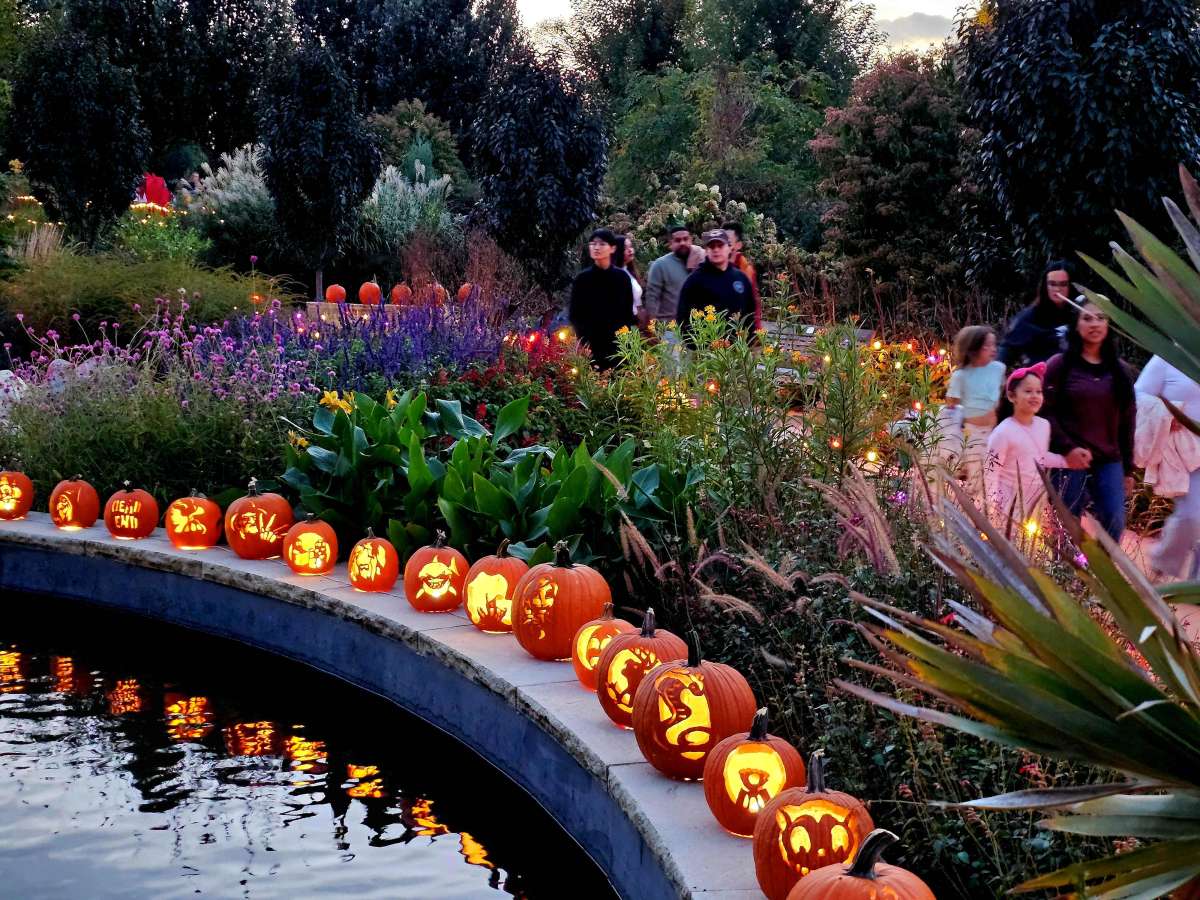
Project: a glowing pumpkin pathway
This is a low-cost way to light your path and give the garden a proper atmosphere. It takes about an hour once you have the pumpkins.
What you need
- Small pumpkins or squashes (one for every metre of path)
- A sturdy spoon or scoop
- A small serrated carving knife or a pumpkin carving kit
- Battery-powered LED tea lights
- A marker pen
- Newspaper or a tray to catch the pulp
Steps
- Cut a lid around the stalk, angling the blade inwards so the lid doesn't drop through.
- Scoop out the seeds and stringy flesh, then scrape the walls until they are fairly smooth.
- Draw a simple face or pattern with the marker. Bold shapes work better than fine detail.
- Carve slowly, pushing the blade away from your hand, and keep fingers behind the cutting line.
- Put an LED light inside and replace the lid.
- Set the pumpkins on a flat, dry surface along the edge of the path, spaced evenly.
Using LED lights rather than real candles removes the fire risk and means the display won't blow out in a breeze. Carved pumpkins also last longer when kept out of direct sun and away from heavy rain.
Lighting and electrics outdoors
Solar stakes and battery lights are the easiest choice for a beginner. If you plan to use mains-powered lights, check that they are rated for outdoor use, keep plugs and connectors off the ground and out of puddles, and run the supply through an RCD for added protection. Switch everything off and bring it in if heavy rain is forecast.
Be kind to wildlife
Autumn is when many garden animals are looking for a place to hide or feed. A few small choices make a big difference.
- Skip the fake cobweb. Stretchy synthetic webbing can snare birds, insects and small mammals. Use fabric strips, paper or string hung high and out of the way, and take it down promptly.
- Check before you move things. Piles of leaves, logs and stacked pots are favourite hiding spots for hedgehogs and toads.
- Avoid fixing lights into hedges. Nesting birds and roosting insects may still be using them.
- Leave a safe route. Keep a gap at the base of fences so hedgehogs can still pass through.
The same care applies to any bonfire you build for 5 November. Build it on the day if you can, or check the base carefully, because small animals often move into a ready-made pile.
Clearing up without waste
The tidy-up is where a lot of seasonal décor goes wrong. Plan it from the start and you'll waste less.
- Compost pumpkin flesh. Plain, unpainted pumpkin breaks down well in a compost heap. Chop it up first so it rots faster, and remove any candle wax, paint or glitter.
- Check your council. Many local authorities accept food waste in a caddy or garden waste bin, so check the rules where you live.
- Save the seeds. Rinse, dry and roast them for a snack, or keep a few dry for sowing next spring.
- Store decorations properly. Remove batteries from lights, wipe everything dry and keep it in a lidded box in a dry shed or garage.
Making it last year after year
The most sustainable decorations are the ones you reuse. Painted stones, wooden silhouettes cut from offcuts and jam jars with battery lights all survive from one October to the next, and they cost very little. Grow a few ornamental gourds or small pumpkins in a sunny corner of the garden and you can harvest your own display, which suits homeowners who like to keep costs down.
The bottom line
A good Halloween garden doesn't need to be elaborate. Clear the path, use safe lighting, choose materials that won't harm wildlife and plan the clear-up before you start. Do those four things and you'll have a display that looks great, keeps everyday risks low and leaves your garden in good shape for winter.